20 Top Ideas On Global Health and Safety Consultants Software
Wiki Article
It's Your World, Your Workplace- A Guide For International Health And Safety Services
When a business has its operations spread across several countries, its workplace is no longer a singular building or location. It's an interconnected network of sites every one of them a different cultural, legal, and operational context. The traditional model of placing rules for safety that are based on the headquarters of every overseas outpost has flopped repeatedly, resulting in anger from local workers and exposing organizations that have parent companies to liability they didn't know existed. Health and safety in the international arena have evolved to address this requirement, implementing a mixed model that respects local sovereignty while keeping an international presence. This guide offers essential ten things you need to know about how modern international health and safety practices actually function, moving beyond theories to the concrete methods of protecting a global workforce.
1. The Difference Between Global Standards and Local Legislation
One of the most important lessons that safety professionals from around the world discover is that international requirements and locally-based laws are not the same. A business might have excellent internal standards based off ISO frameworks but if those standards violate local laws for instance in Indonesia or Brazil the local law wins every time. International health and safety services are available to help navigate this conflict and assist businesses in developing systems that meet or surpass requirements of the global marketplace while remaining compliant in every jurisdiction where they operate. This requires consultants who comprehend internationally-based benchmarks as well as specific requirements of a number of nations.
2. The Three-Legged Stool of International Safety Services
Effective health and safety programs rest on three interdependent pillars: expert advice, robust software platforms, and locally sourced services that are locally delivered. The consulting segment provides technological and strategic direction aiding organizations in the design of plans that transcend borders. The software part provides the infrastructure for data collection reports, visibility, and transparency. The local services leg--including training, audits, and assessments delivered by in-country professionals--ensures that global strategies translate into local action. In the event that one leg is removed the structure will become unstable that results in theoretical plans without execution or local actions inaccessible to headquarters.
3. Auditing across cultures requires local Knowledge
Audits for safety and health at the international level offer challenges that the domestic audits can't handle. Auditors have to overcome barriers to communication, cultural beliefs to safety, and diverse methods of documentation. A auditor from Europe visiting an industrial facility in Vietnam cannot just apply European methods and expect accurate results. The most effective international auditing services employ auditors who are natives to the region, or with substantial experiences in the country, who can understand not only the technical standards but also the way work happens in a specific cultural context. Auditors who are native to the region serve as cultural translators, as well as technical assessors.
4. Risk Assessment Is Never One-Size-Fits-All
A risk assessment procedure that is ideal for an office in London is not the best choice for a construction site in Dubai or a mine in Chile. International safety organizations recognize that although risk assessment concepts could be universal but their application needs to be extremely localized. Effective companies have libraries of the country-specific risk profiles as well as assessment template templates, enabling them create assessments that reflect local conditions, not generic international assumptions. This localisation extends to considering regional hazards -- cyclones affecting the Philippines for instance, earthquakes in Japan and the political instability of specific regions -- that global frameworks may otherwise ignore.
5. Software Must Work Where Internet Doesn't
Many software systems in the world do not work because they depend on continuous, high-bandwidth internet connectivity. The reality is that many global workplaces have intermittent connectivity on high-end offshore platforms, remote mining factories, and remote mining the developing world often have no reliable internet access. Professionally developed international health and safety software solutions recognize this providing robust offline functionality that allows users log incidents, make complete assessments or access documentation even without connectivity in the first place, and automatically synchronising when connection is restored. This is a practical distinction between platforms designed for global fieldwork from those designed for headquarters use solely.
6. The Consultant as Translator Between Worlds
International health and safety consultants perform a function that goes way beyond providing technical guidance. They act as translators--not just to speak a language, but of expectations or practices as well as legal expectations. Consultants working for an Japanese parent company that has operations in Mexico must understand not only Mexican safety laws, but also Japanese expectations regarding corporate reporting and be able to explain these to each other in terms they can understand. This is best service international consultants can provide, helping to avoid misunderstandings that so often derail worldwide safety initiatives.
7. The Training Program is based on respect for local learning Cultures
Safety training designed in an area isn't always transferable to another with little or no change. Instructional methods that work well in Germany could be completely unsuitable and completely in Thailand in a country where the dynamics of classrooms and attitudes toward authority differ substantially. International health and safety agencies including training and education have adapted not just the language of their training materials, but also their overall pedagogical approach to match the local culture of learning. This could result in more hands-on teaching in certain regions, or more formal classroom instruction in others and careful consideration of who conducts the training and how they are perceived locally.
8. The Growing Relevance of Psychosocial Risk Management
International health and safety solutions have been expanding beyond physical security to tackle psychosocial issues such as harassment, stress mental health, and burnout. These issues can be seen differently across different cultures. What is considered to be the definition of harassment in one culture may appear to be acceptable workplace conduct for another, but multinational corporations must adhere to the same ethical standards throughout the world. Modern international safety experts assist companies in navigating this challenging terrain by establishing policies which reflect local standards as well as promoting global values and training local managers to recognize and manage psychosocial risks in a timely manner.
9. Supply Chain Pressure is driving demand for services
Multinational corporations are being held accountable for their health and safety conditions across the supply chain, and not just within their operations. The pressure to improve their reputation and compliance has led to the worldwide demand for health and safety services to evaluate and improve the quality of conditions at supplier facilities around the world. They often combine auditing - checking the compliance of suppliers with buyer standards, and aid in building capacity. They help suppliers build the capabilities to manage their safety instead of simply policing mistakes.
10. The transition from periodic to Continuous Engagement
For a long time, international health safety organizations operated on plan-of-action basis. An organization hired consultants for an audit. They would then write reports, and then leave. The modern approach is entirely different, with continuous engagement through the integration of software and platforms. Clients maintain ongoing visibility of their global safety status, consultants offer constant support rather than only specific recommendations, and local providers offer services on an as-needed basis and coordinated with the central platform. This shift from occasional to ongoing involvement is indicative of the fact that safety isn't one-time project that has a defined date, but an task that requires constant attention. See the best international health and safety for more info including worker safety, safety tips, workplace safety courses, safety video, ohs act, safety meeting topics, worker safety training, safety precautions, risk assessment, safety companies and most popular health and safety consultants for site info including occupational health and safety jobs, job safety assessment, occupational health and safety specialist, safety topics, safety precautions, office safety, health and safety, risk assessment, safety report, workplace safety courses and more.
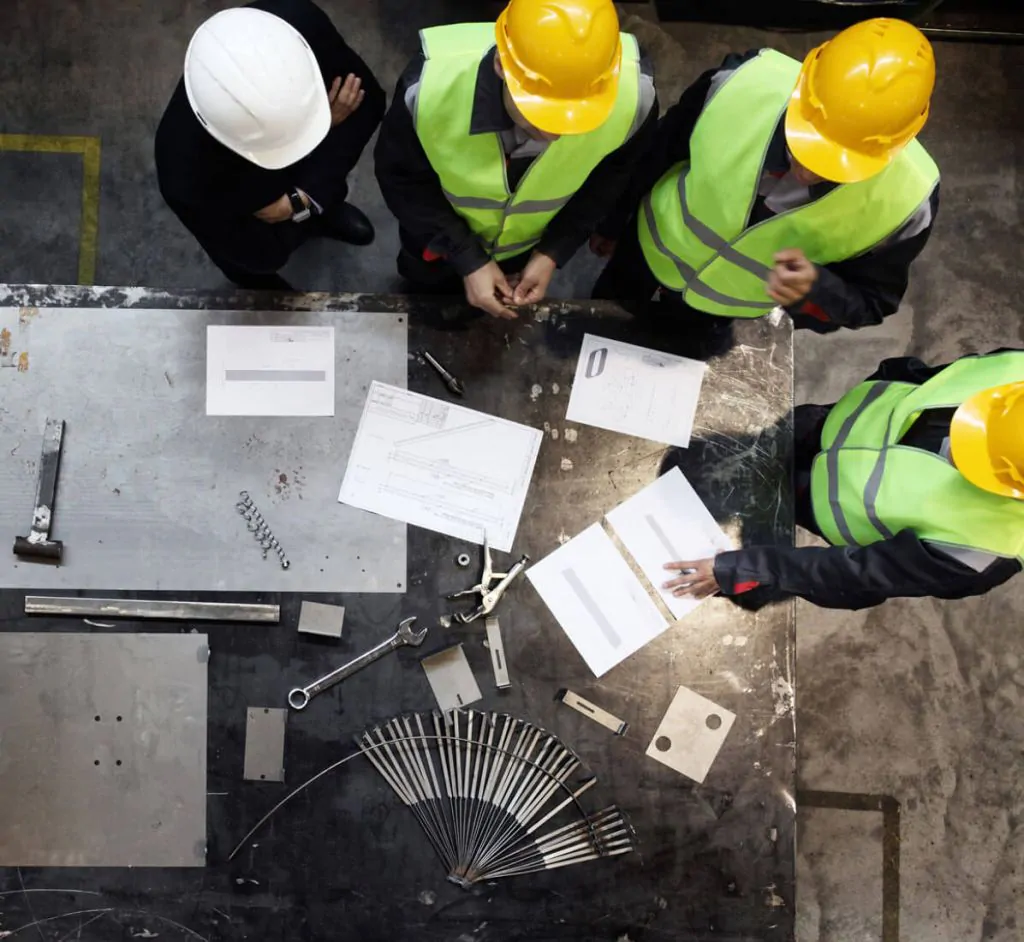
The Future Of Workplace Safety: The Integration Of On-The Ground Expertise With Global Tech Solutions
The safety industry is at a crossroads. For the past century, progress meant improved engineering controls, more thorough training, as well as more strict enforcement. These methods are still essential however they have ascended to an end in some industries. The next big leap will never come from one new technology but rather from the amalgamation of two skills that have been developed independently by the deep and innate wisdom of experienced safety personnel who know their specific work environments, and the analytical capabilities of technological platforms worldwide that can process massive amounts of information and reveal patterns that are obvious to any individual observer. This isn't about replacing humans with computer algorithms. It's about improving human judgment by using machine intelligence, so that the safety expert on the ground can be more efficient, more knowledgeable, and much more effective and effective than it has ever been. It is the new reality of work safety will be people who are able to blend these two worlds seamlessly.
1. There are limits to Purely Technological Approaches
Technology companies have repeatedly claimed that software alone will provide safety for workers. Sensors would identify hazards or dangers, algorithms would detect incidents and artificial Intelligence would tell workers what to do. These promises have consistently failed since safety is a fundamentally human issue. It's a question of human behavior human judgement, human relationships and human-caused consequences. Technology is able to inform and empower however it cannot substitute for the nitty-gritty knowledge that an expert safety professional has to offer to a workplace that is complex. The future is about integration, not replacement.
2. A Limit to Purely Human Approaches
In contrast, the human approach have reached their limit. Even the most skilled safety professional can only observe an inordinate amount of information, retain too many details, and make numerous dots. Human judgment is subject to fatigue, bias, and the limitations of individual perception. A single person is unable to grasp in their minds the patterns that emerge across multiple sites and indicators, which have been a precursor to other incidents, or the regulatory changes impacting industries that they personally do not adhere to. Technology can extend human capability beyond the natural limits of human capability, offering the ability to remember patterns, memory, and a global view that enhances rather than substitute professional judgment.
3. Predictive Analytics Helps You Decide Where to Go
One of the most powerful applications of combined capabilities is predictive analytics that directs experts at the ground they should focus their attention. The software analyses previous incident information, near-miss reports, audit results, and operational metrics in order to identify certain locations, actions, and situations that are associated with increased risk. The safety professionals investigate these projections using human judgment to understand what the numbers mean within their context. Are the risks projected to be real? What underlying factors are driving these risks? What kinds of actions make sense in light of local constraints as well as the cultural context? The technology provides the information; it is the human who decides.
4. Sensors and wearables create continuous Data Streams
The explosion of wearables and sensors in the environmental creates continuous streams of safety-relevant data that are impossible to obtain by human hands. Heart rate variation indicates fatigue. Air quality measures identifying hazardous exposures. The tracking of locations identifies access that is not authorized to dangerous areas. Motion sensors detecting slips or falls. All platforms across the world aggregate this data across all regions and sites, identifying patterns that warrant attentiveness from humans. On-the-ground experts then investigate by validating sensor readings comprehending context and determining the most appropriate response. The sensors provide the data; the humans provide the interpretation.
5. Global Platforms Allow Local Benchmarking
Safety professionals have often wondered what their performance is compared to others, but reliable benchmarks were scarce. Global technology platforms have changed this by aggregating anonymised data across industries and geographic regions. Safety managers in Malaysia can now see the way their incident rates as well as audit results and key indicators are compared to similar facilities in the region as well as globally. This helps to set priorities and helps justify request for resources. If local experts are able to demonstrate that their performance lags their peers in the region, they can gain credibility for investing. If they lead it, they get credibility and recognition.
6. Digital Twins Allow Remote Expert Consultation
Digital twin technology -- which allows for virtual replicas of physical workplaces, which are updated with real-time updates-- creates a new model for expert consultation. When a safety expert on-site encounters a complex problem the safety professional can be in touch remotely to experts from around the world who are able to explore the digital model, study relevant data, and provide guidance without having to travel. This option allows access to knowledge, allowing facilities which are in remote locations as well as developing economies to gain access to expertise that would otherwise be unavailable or costly.
7. Machine Learning Identifies Leading Indicators
Traditional safety metrics are nearly completely sagging. They reveal what's occurred. Machine learning implemented to integrate data sets is becoming more adept at identifying key indicators that can predict future incidents. The patterns of near-miss reporting change. Shifts in the types of observations that are recorded during safety walks. Variations in the time between hazard identification and correction. These indicators with the most significant, as identified by algorithms, serve as the focus of experts on the ground who can determine what's creating the shifts and intervene in the event of an incident.
8. Natural Speech Processing Extracts Information from Unstructured Data
A majority of important safety information exists in unstructured forms--investigation reports, safety meetings minutes, notes on interviews, emails and discussions. Natural language processing tools within integrated platforms are able to analyze this content on a global scale to identify thematic patterns, sentiment shifts, and emerging concerns that a human reader cannot take in. If the software discovers that individuals across several sites are experiencing similar frustrations over certain procedures the system alerts regional and global experts who can investigate what the procedure actually requires overhaul, not just local enforcement.
9. Training Becomes Personalised and Adaptive
The combination of practical experience combined with technology from around the world allows training that is adapted to preferences of each employee. The platform tracks each employee's task, knowledge, and experience, as well as their incident information, and the time since training was completed. When patterns show specific knowledge gap--workers who play certain roles frequently have been involved in specific types of incidents--the system recommends targeted instructional interventions. Local experts evaluate these recommendations, changing the content to fit the context, and supervise the delivery. Training is personalised and continuous rather than sporadic and generic in that it addresses the real needs of learners rather than presumed requirements.
10. The role of the Safety Professional enhances
The most significant result of this merger is the increase of the job of the safety professional. Eliminated from data collection and reporting tasks that software is better at handling, local experts are able to focus their attention on more profitable tasks, such as establishing relationships with employees, gaining insight into operational realities developing effective interventions and influencing organisational culture. Their insight is more valuable since it is based off the data they couldn't have collected themselves. Their recommendations have more credibility since they are based on information that goes beyond the personal experiences. The future workplace safety professional will not be harmed by technology but empowered by it--more educated, more influential, and more efficient than before. See the recommended health and safety consultants and software for more advice including health and safety jobs, health and safety tips in the workplace, employee safety training, jobsite safety analysis, health and safety, workplace health, occupational health and safety jobs, safety tips for work, hazard identification, safety at work training and more.
